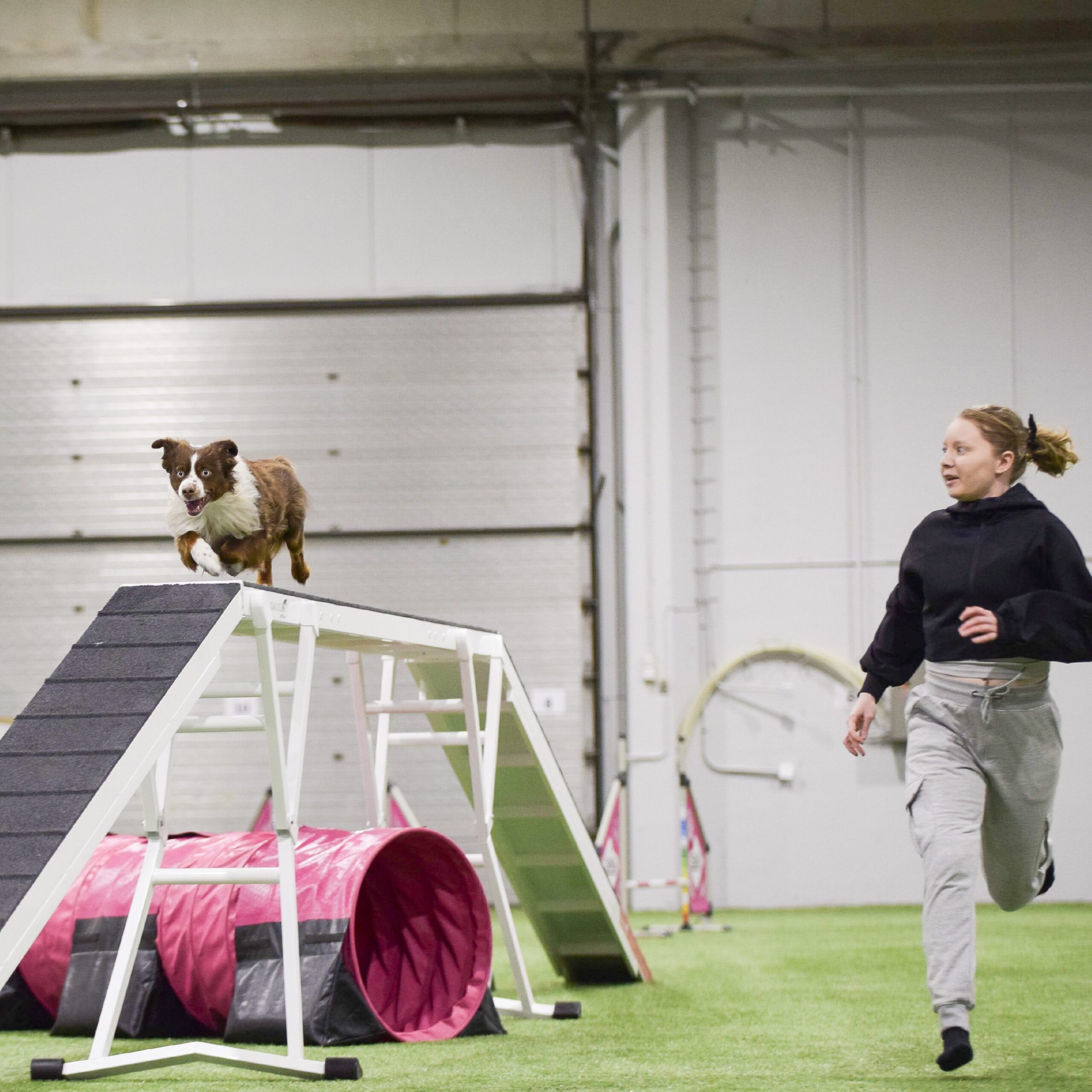
Confidence isn’t just mental.
Much of the confidence you feel on an agility course comes from knowing your body can do what your brain is asking of it.
When you’re physically prepared, you stop worrying about whether you’ll make the next cross or arrive on time. Instead, you can focus on reading your dog and making good handling decisions.
Confidence comes from capability
If accelerating feels difficult, your timing becomes uncertain.
If stopping quickly feels unstable, you may hesitate before a turn.
If you tire easily, your movement quality often declines as the course progresses.
Improving your physical abilities reduces these limitations and allows you to trust your body under pressure.
Better movement creates better timing
Efficient movement means arriving where you need to be with less effort.
Instead of rushing or overcompensating, you can maintain rhythm, stay connected with your dog, and execute handling techniques more consistently.
Confidence grows through repeated successful experiences.
Preparation reduces mental load
Competition already demands focus.
When movement feels automatic, your brain has more capacity to analyse the course, adapt to your dog’s performance, and make quick decisions.
Physical preparation helps simplify the things your body needs to do, allowing you to concentrate on the partnership.
Confidence is built before competition
Waiting until competition day to feel confident rarely works.
Confidence develops through consistent training that improves strength, movement quality, and physical readiness over time.
Every workout is another opportunity to build trust in your body.
The takeaway
The strongest handlers aren’t always the fastest – they’re the ones who can move efficiently, stay in control, and trust themselves when it matters most.
When your body is prepared, confidence becomes a natural consequence rather than something you have to force.
No responses yet